
Burglars rarely pick a garage door lock. Most break in by reaching through a small gap at the top of the door to trip the emergency release, by grabbing an old fixed-code remote signal, or by simply walking in because the door was left unlocked or cracked for ventilation. Every one of these methods has a cheap, specific fix.
How It Actually Happens
The Emergency Release Reach-In
Nearly every garage door has a manual release cord hanging from the opener trolley, meant to let you open the door by hand during a power outage. If there's any gap between the top panel and the frame, someone can slide a wire or a bent coat hanger through, snag that cord, and disconnect the opener in seconds. From there the door lifts by hand. This is still one of the most common entry methods because so few homeowners know the cord exists until it's too late.
Old Opener Codes
Openers made before the late 1990s and some basic replacement remotes use a fixed code that never changes. A cheap code-grabbing device can capture that signal from the street and replay it later. If your opener still uses switches (DIP switches) to set the code instead of a rolling or encrypted code, it's vulnerable.
Brute Force on a Weak Door
Salt air near the coast and constant humidity speed up corrosion on hinges, tracks, and lock hardware. A door that's already rusted, warped from moisture, or running on worn rollers doesn't take much force to pop off-track or pry open. Storm-damaged panels from a prior hurricane season are an easy target if they were never properly repaired.
The Side Door and the Opener Left in the Car
A garage almost always has a pedestrian side door, and it's frequently left unlocked because people assume the big door is the only entry point. Just as common: leaving the garage door remote clipped to a car's visor or sitting on a dashboard, where it's visible through the window.
Why Florida Conditions Make This Worse
Humidity causes wood and composite doors to swell, which leads some homeowners to prop the door open a few inches for airflow during the hottest, stickiest months — exactly the gap a coat-hanger trick needs. During hurricane season, homes also sit vacant for longer stretches while owners evacuate, giving an already-weakened door more time to be tested unnoticed. And coastal salt air corrodes exposed hardware faster than people expect, so a lock or hinge that looks fine can be weaker than it appears.
Habits and Hardware That Actually Stop It
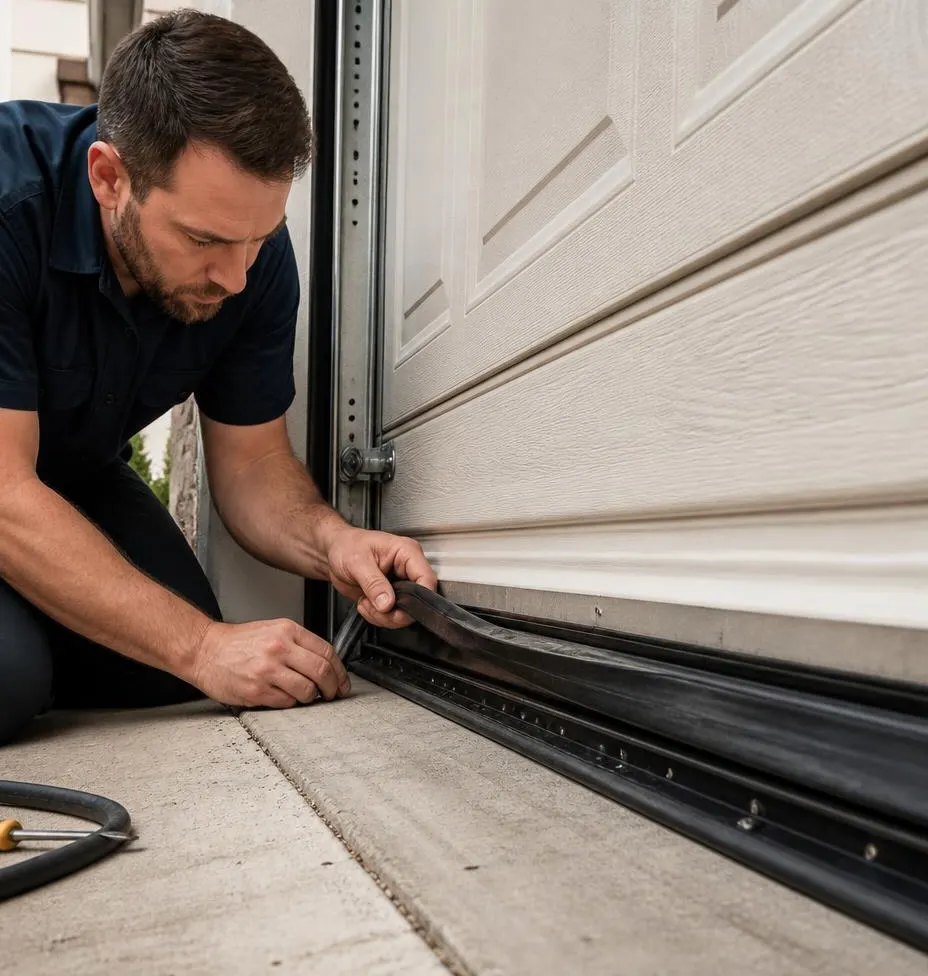
- Close every gap. If daylight shows at the top or sides of the door, have the weatherstripping and seals adjusted — it blocks the reach-in trick and keeps rain out too.
- Add an emergency release shield. A simple metal guard or a zip-tie trick that still allows manual release in a real power outage but blocks a coat hanger is a low-cost fix.
- Upgrade to a rolling-code opener. If your opener still uses DIP switches, replace it. Rolling-code and encrypted openers make signal-grabbing useless.
- Lock the side door and the disconnect switch. A deadbolt on the pedestrian door and a vacation lock on the opener's manual release add real resistance.
- Don't store the remote in the car. Use a keypad entry or smartphone app instead.
- Keep hardware ahead of corrosion. Rinse salt residue off hinges and tracks periodically and replace rusted rollers or springs before they fail — a door that operates smoothly is also harder to force open.
When to Call St. Augustine Garage Door Pro
If your opener still uses old switch-set codes, if there's a visible gap around your door, or if hinges and tracks show rust and resistance, it's worth a visit before a storm season gap turns into an actual break-in. We handle garage door opener repair & installation for homeowners wanting rolling-code and smart options, and garage door maintenance to catch corrosion, worn rollers, and loose hardware before they become security risks.
If you're in St. Augustine, St. Augustine Beach, Ponte Vedra Beach, or anywhere nearby and want your garage door checked for these exact weak points, call St. Augustine Garage Door Pro today to schedule a visit.