
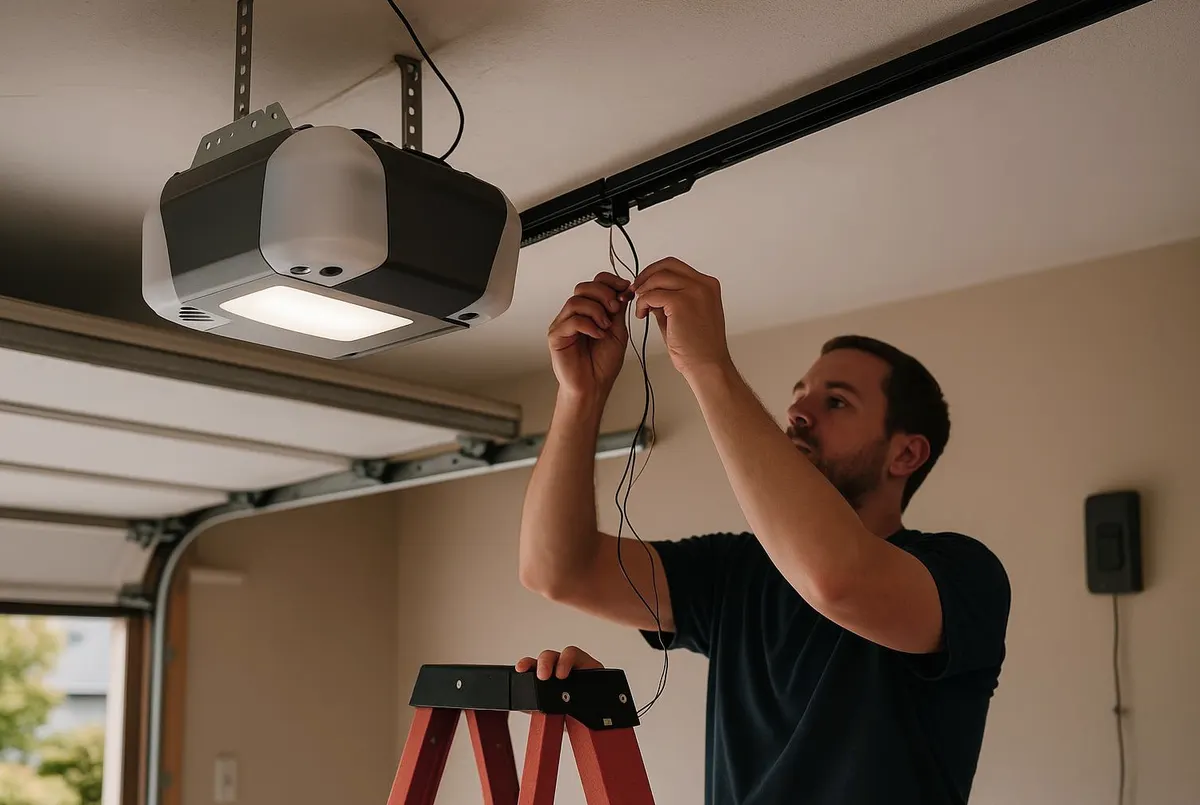
Rule of thumb: if you tune up your garage door once a year, do it in late fall, before the first real cold snap and the last gasp of hurricane season overlap. The exceptions are homes near the coast, where salt air speeds up corrosion year-round, and doors that took a beating during summer storms but never got inspected afterward — those need attention now, not in spring.
Winter here isn't brutal, but it's not nothing either. Nighttime temperatures can dip into the 30s and 40s, days swing 20-30 degrees from morning to afternoon, and humidity never really goes away. That combination of temperature swings, lingering moisture, and salt in the air near Ponte Vedra Beach, St. Augustine Beach, and Jacksonville Beach is exactly what causes garage door problems to show up in December and January that homeowners didn't see coming.
Check the Weatherstripping First
The rubber seal along the bottom of your door and the strips along the sides do more work than people realize. After a hot, humid summer, that rubber can crack, flatten, or pull away from the track. A gap you can see daylight through isn't just a draft problem — it's an open invitation for wind-driven rain during winter storms and for small animals looking for a dry place to nest.
- Press a finger along the bottom seal. If it feels stiff or brittle instead of pliable, it's time to replace it.
- Look for gaps at the corners where the seal meets the track — this is the first place it fails.
- Side and top seals (if your door has them) should sit flush against the frame with no visible light coming through.
Why This Matters More Here
Afternoon downpours don't stop just because it's cooler out, and a worn seal lets moisture into the garage, which speeds up rust on tools, stored items, and the door's own hardware.
Lubricate Before Moisture Causes Problems
Humidity swells wood-composite panels and thickens old grease on hinges, rollers, and tracks. A light coat of garage-door-specific lubricant (not WD-40, which is a solvent, not a lubricant) on hinges, rollers, and the torsion spring keeps everything moving smoothly and helps displace moisture before it turns into rust.
- Wipe down tracks with a dry cloth to remove dust and old grease buildup.
- Apply lubricant to hinges, roller bearings, and the spring — not the track itself, which should stay dry.
- Run the door up and down a few times to work the lubricant in.
Inspect for Rust and Corrosion
This is the step coastal homeowners can't skip. Salt air carried inland from the beaches accelerates rust on springs, hinges, and tracks even on doors that look fine from a distance. Check the torsion spring closely — surface rust there isn't just cosmetic, it weakens the metal and makes a spring more likely to snap without warning. If you see flaking or pitting on any hardware, that's a sign the part is closer to failure than its age alone would suggest.
Test the Balance and Listen to the Springs
Disconnect the opener and lift the door halfway by hand. It should stay in place on its own. If it drifts up or slams down, the springs are out of balance — often from a long, humid summer of heavy use (garage doors get opened and closed more when people are in and out doing yard work or running AC units). An unbalanced door puts extra strain on the opener and increases the odds of a spring failing in cold weather, when metal is slightly less forgiving under tension.
Check the Opener, Sensors, and Battery Backup
Cold, damp mornings can be hard on electronics that have been baking in a hot garage all summer. Wipe down the safety sensor lenses near the floor — dust and spiderwebs are common culprits for a door that won't close. If your opener has battery backup, test it now; power blips are more common during the tail end of storm season, and you don't want to discover a dead backup battery during an actual outage.
Look for Storm Damage You Might Have Missed
If your door took wind-driven rain or debris during hurricane season, don't assume it's fine just because it still opens and closes. Check for dents that may have thrown off the panel alignment, bent tracks, or warping along the bottom panel where standing water sits longest. A door that's slightly out of alignment now will only get worse as temperatures and humidity keep shifting through winter.
When to Call St. Augustine Garage Door Pro
If your balance test fails, you spot rust on the spring, or the door is sticking, grinding, or reversing on its own, it's worth having it looked at before those small issues turn into a weekend emergency. We handle garage door maintenance tune-ups that cover lubrication, hardware inspection, and balance adjustment in one visit, and we do spring replacement when corrosion or wear has gone past the point of a quick fix. Catching it now is a lot less disruptive than dealing with a door that won't open on a cold, rainy morning.
If you're searching for a garage door company near St. Augustine, FL, or you just want your door checked before winter settles in, give St. Augustine Garage Door Pro a call. We serve St. Augustine, St. Augustine Beach, Ponte Vedra Beach, Elkton, Hastings, Palm Coast, Jacksonville Beach, and Palatka — reach out today to get your garage door ready for the season ahead.